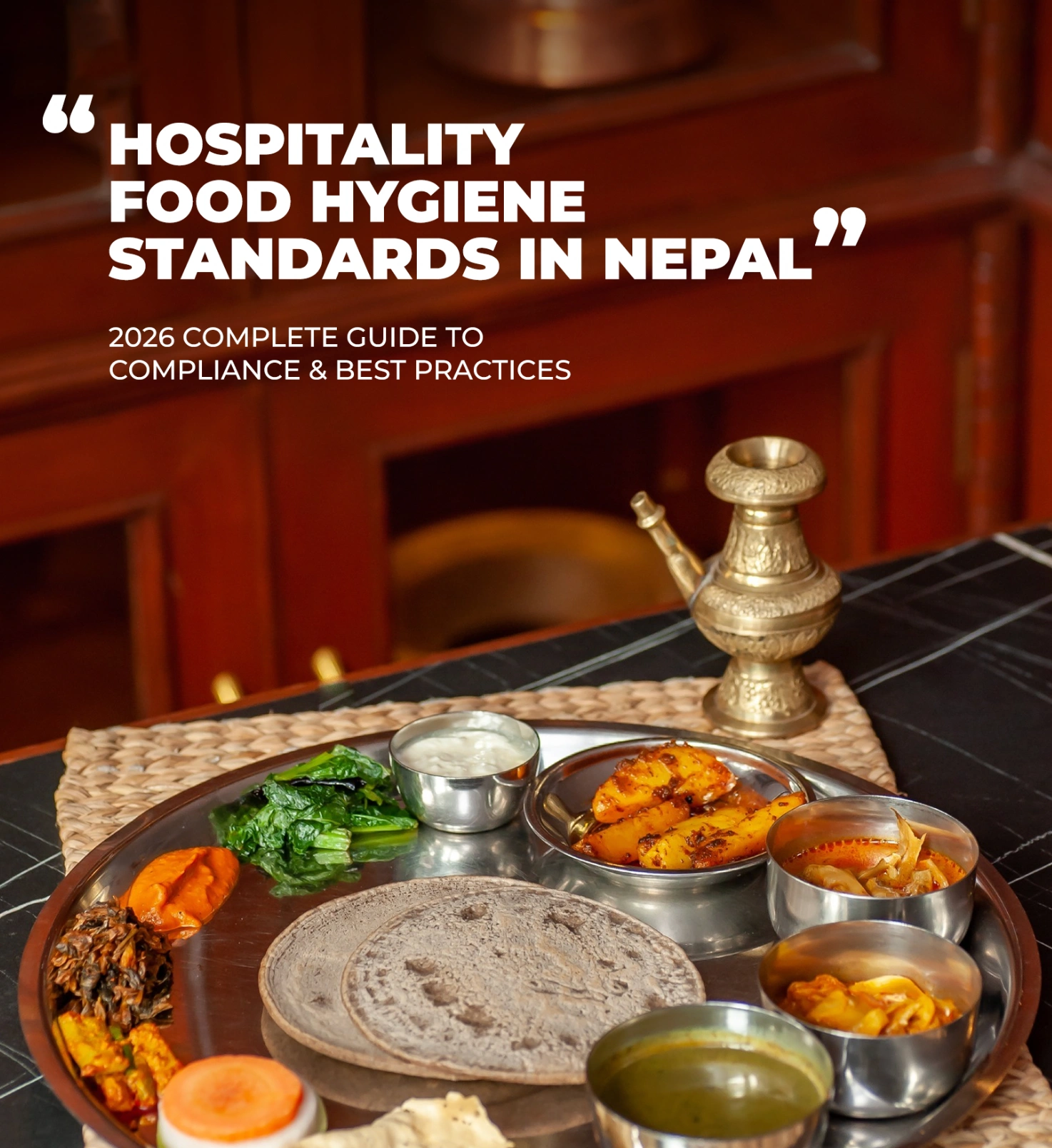
Nepal is welcoming more tourists than ever in 2026. This growth makes hospitality food hygiene standards in Nepal a top priority for every business. Whether you run a small tea shop or a five-star hotel, serving safe food is your biggest responsibility. Tourists today are very careful about what they eat and where they stay. The government has introduced the Food Hygiene and Quality Act Nepal 2081 to ensure everyone follows high standards. This new law helps protect the health of both locals and international visitors.
Following strict food safety standards Nepal is the best way to build a great reputation. It is not just about avoiding fines from the Department of Food Technology and Quality Control (DFTQC food hygiene). It is about making sure every guest leaves your restaurant happy and healthy. This guide explains how to meet the hospitality food hygiene standards in Nepal to keep your business successful. Let us look at the rules and best practices for 2026.
Why Hospitality Food Hygiene Standards in Nepal Are Critical for Hotels and Restaurants
Maintaining high hospitality food hygiene standards in Nepal is more than just a legal duty. It is the foundation of a successful tourism business. If one guest gets sick, your reputation can be ruined online in minutes.
Impact on Tourist Health and Nepal’s Tourism Reputation
- International visitors often have sensitive stomachs compared to locals.
- Tourist food safety Nepal is a major topic on travel blogs and review sites.
- Good hygiene supports sustainable tourism food safety by keeping the industry healthy.
Economic Benefits of Strong Food Safety Standards Nepal
When you follow food safety standards Nepal, you get higher ratings on Google and TripAdvisor. Repeat business is much higher for hotels that look and feel clean. Clean kitchens also lead to less food waste, which saves you money.
Legal and Public Health Risks of Non-Compliance
The DFTQC food hygiene department conducts surprise inspections regularly. If your kitchen is dirty, you could face heavy fines or even be forced to close. It is much cheaper to be clean than to pay for legal mistakes.
Understanding the Food Hygiene and Quality Act 2081: Nepal’s New Food Safety Standards
The government recently passed the Food Hygiene and Quality Act Nepal 2081. This law replaced the old 1967 rules to match modern global standards.
Key Changes from the Old Food Act 1967
The new law is much stricter and covers every step of the food chain. It focuses on prevention rather than just punishment. It also gives more power to local authorities to check hotel restaurant hygiene Nepal.
Main Provisions Relevant to Hospitality Businesses
- Every food business must have a valid license and registration from the DFTQC.
- Selling contaminated or low-quality food is a serious crime under this act.
- Businesses must follow provincial and local level enforcement rules.
Alignment with International Benchmarks (Codex Alimentarius)
Nepal now follows the Codex Alimentarius Nepal guidelines. This means our food laws are now similar to those in Europe and America. This helps international tourists feel much safer eating at our local establishments.
DFTQC Regulations and Classification System for Hotel & Restaurant Hygiene Nepal
The DFTQC food hygiene department uses a color-coded sticker system to rank restaurants. This helps customers know the quality of a kitchen before they sit down.
Mandatory Registration and Approval Process for Food Businesses
- Apply for a recommendation from the DFTQC office.
- Get approval from your local municipality or ward office.
- Prepare for ongoing inspections to keep your license active.
Four-Tier Classification (Very Good / Good / Medium / Average)
The government gives out stickers based on a hygiene checklist for restaurants.
- Green Sticker: Very Good (Follows all rules perfectly).
- Blue Sticker: Good (Minor improvements needed).
- Yellow Sticker: Medium (Needs significant work).
- Red Sticker: Average (Risky and needs immediate changes).
Food Safety Sticker Program for Highway Hotels & Eateries
If you run a hotel on a highway, these stickers are mandatory. Travelers often look for the green sticker before they decide where to stop for lunch.
GMP, GHP, and HACCP Principles: Core of Hospitality Food Hygiene Standards in Nepal
To get a top rating, you need to understand GMP, GHP, and HACCP Nepal systems. These are international methods used to keep food safe from farm to table.
What GMP, GHP & HACCP Mean for Nepali Hotels
GMP means Good Manufacturing Practices, and GHP means Good Hygiene Practices. These focus on the environment of your kitchen. HACCP principles help you find specific points where food could become dangerous. These are now part of the core hospitality food hygiene standards in Nepal.
7 Key Principles of HACCP in Hospitality Settings
- Analyze hazards (What can go wrong?).
- Identify critical control points (Where can we stop the risk?).
- Set limits (What temperature is safe?).
- Monitor the points (Check the temperature regularly).
- Take corrective action (Throw away food that is unsafe).
- Verify the system (Check if your plan is working).
- Keep records (Write down everything you check).
Practical Application in Daily Operations
You must focus on cross-contamination prevention by using different boards for meat and vegetables. Kitchen sanitation should be done every single day. Make sure you have a strict plan for food adulteration prevention as well.
Best Practices for Implementing Food Hygiene in Nepali Hotels and Restaurants
Implementing hotel restaurant hygiene Nepal standards requires a dedicated team. You cannot do it alone; every staff member must help.
Personal Hygiene Practices for Food Handlers
Your staff must follow strict personal hygiene practices. They should wash their hands frequently and wear clean uniforms. Hairnets and gloves are essential when handling ready-to-eat meals.
Kitchen Sanitation and Storage Guidelines
Keep your dry storage and cold storage separate. Label all food with dates to avoid using expired items. A regular cleaning schedule for the floors and walls is also required.
Water Safety, Waste Management & Pest Control
Safe water is the most important part of food safety standards Nepal. Use filtered or boiled water for cooking and washing dishes. Make sure your waste bins are covered and pest control is done monthly.
Food Safety Training Nepal Hotels – Recommended Programs
Investing in food safety training Nepal hotels is the best way to stay compliant. Your staff will learn about food safety management and how to handle emergencies.
Step-by-Step Guide to Compliance and Certification
Following the hospitality food hygiene standards in Nepal is a step-by-step process. Do not try to change everything in one day.
- Register your business with the DFTQC or your local authority.
- Perform a self-audit using the official hygiene checklist.
- Start using GMP GHP HACCP Nepal systems in your daily work.
- Provide food safety training Nepal hotels for all your employees.
- Schedule regular lab testing for your water and food samples.
- Display your classification sticker proudly in your front window.
Common Challenges & Solutions
Many rural hotels find it hard to get clean water or training. The solution is to work with local NGOs or the DFTQC for support. Using solar water heaters can also help with sanitation in remote areas.
How to Achieve “Very Good” Rating
To get the green sticker, you must be consistent. Keep your records updated and make sure your staff follows personal hygiene practices even when you are not watching.
Future of Hospitality Food Hygiene Standards in Nepal
The future of hospitality food hygiene standards in Nepal will involve more technology. We are seeing more digital tracking for food delivery and storage temperatures. This will make it easier for businesses to prove they are safe.
As we move past 2026, the demand for sustainable tourism food safety will grow. High hygiene levels will help Nepal compete with other global destinations. Excellence in food safety is the best way to grow your business in the long run.
FAQ
What is the new Food Act in Nepal?
The Food Hygiene and Quality Act Nepal 2081 is the new law that regulates all food businesses.
Who checks food hygiene in Nepal?
The DFTQC food hygiene department is responsible for inspecting hotels and restaurants.
Why is HACCP important for my hotel?
HACCP principles help you prevent food poisoning by identifying risks before they happen.
How often should I train my staff?
You should provide food safety training Nepal hotels at least once every six months.
Conclusion
Mastering the hospitality food hygiene standards in Nepal is essential for every business owner in 2026. By following the Food Hygiene and Quality Act Nepal, you protect your guests and your future. Remember that food safety standards Nepal are about more than just rules; they are about care and quality. Start by training your team and improving your kitchen sanitation today. Clean food leads to happy tourists and a stronger economy for our beautiful country.